



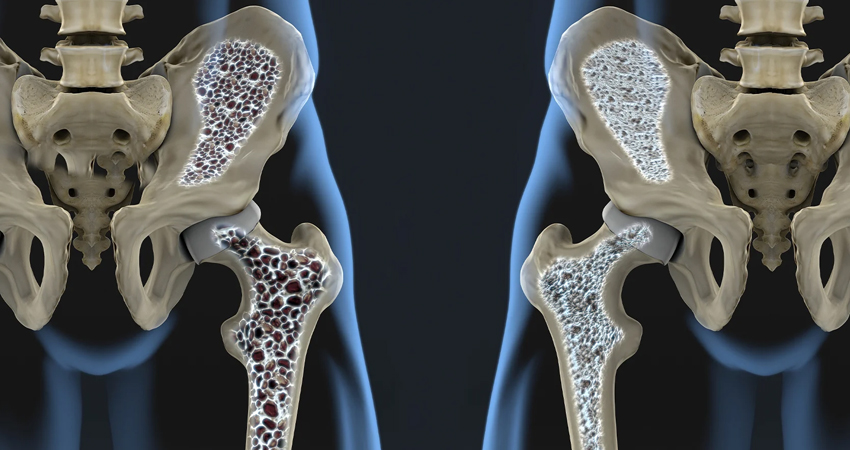
Osteoporosis
Osteoporosis is a condition characterised by low bone density and deterioration of bone tissue, making bones fragile and susceptible to fractures. It is often called a "silent disease" because bone loss occurs gradually without symptoms until a fracture occurs. It is especially common in post-menopausal women and older adults, but can also result from hormonal disorders.
Risk Factors
- Post-menopausal women (loss of oestrogen accelerates bone loss)
- Older age
- Family history of osteoporosis or fragility fractures
- Long-term steroid (corticosteroid) use
- Hormonal disorders: hypogonadism, hyperthyroidism, hyperparathyroidism, Cushing's syndrome
- Low calcium and vitamin D intake
- Sedentary lifestyle or prolonged immobility
- Smoking and excessive alcohol
- Low body weight
Symptoms
Osteoporosis typically has no symptoms until a fracture occurs. Warning signs may include:
- Loss of height over time
- Stooped posture
- Back pain caused by a fractured or collapsed vertebra
- Fractures that occur more easily than expected
Diagnosis
- DEXA scan (Dual-energy X-ray Absorptiometry) – measures bone mineral density
- Blood tests: calcium, vitamin D, PTH, bone turnover markers
- Thyroid, adrenal, and sex hormone assessment
- FRAX score (10-year fracture risk assessment)
- Spinal X-ray or MRI if vertebral fracture is suspected
Treatment
Calcium & Vitamin D Supplementation
Essential foundation for bone health; correcting deficiencies is the first step.
Anti-Resorptive Medications
Bisphosphonates (e.g., alendronate, zoledronic acid) are the most commonly prescribed to slow bone loss.
Bone-Building Medications
Teriparatide or romosozumab for severe osteoporosis or high fracture risk.
Hormone Replacement Therapy
Oestrogen therapy may be considered in post-menopausal women; testosterone in hypogonadal men.
Lifestyle Measures
Weight-bearing exercise, fall prevention strategies, smoking cessation, and reduced alcohol intake.
Why Choose Dr. Harsh Parekh?
Dr. Harsh Parekh provides comprehensive bone health assessment, including identification of secondary hormonal causes of osteoporosis. His personalised treatment plans focus on preventing fractures, improving bone density, and addressing the underlying hormonal imbalances contributing to bone loss.