


Thyroid Cancer
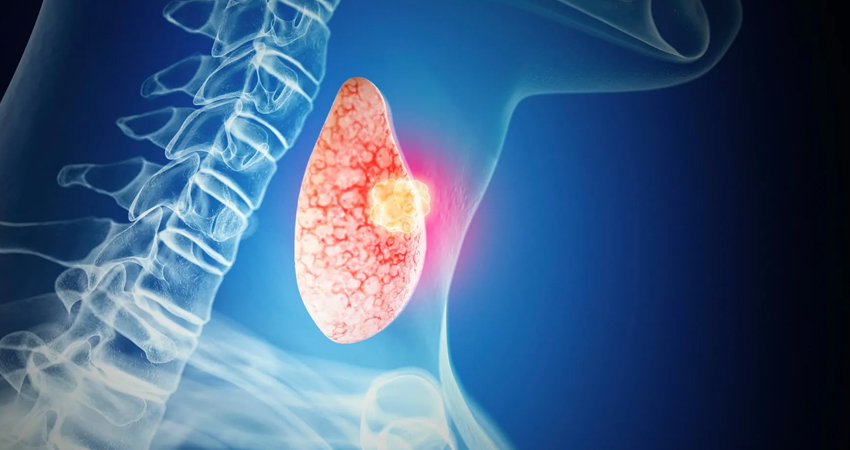
Thyroid cancer develops in the cells of the thyroid gland. It is one of the most treatable forms of cancer, with high survival rates when detected early. Most thyroid cancers are slow-growing and respond well to treatment.
Types of Thyroid Cancer
- Papillary Thyroid Cancer – Most common type; slow growing and highly treatable
- Follicular Thyroid Cancer – Second most common; may spread to lymph nodes or other organs
- Medullary Thyroid Cancer – Can be inherited; produces calcitonin
- Anaplastic Thyroid Cancer – Rare and aggressive; requires aggressive treatment
Symptoms
- A lump or swelling in the neck
- Hoarseness or voice changes
- Difficulty swallowing
- Difficulty breathing
- Persistent cough not related to a cold
- Swollen lymph nodes in the neck
- Pain in the throat or neck
Risk Factors
- Female sex (women are more commonly affected)
- Exposure to radiation, especially in childhood
- Family history of thyroid cancer
- Certain inherited genetic conditions
- Iodine deficiency
Diagnosis
- Thyroid ultrasound
- Fine Needle Aspiration Cytology (FNAC/FNA biopsy)
- Blood tests (TSH, calcitonin, thyroglobulin)
- CT scan or MRI for staging
- Radioiodine scan
Treatment
Surgery
Thyroidectomy (partial or total removal of the thyroid gland) is the primary treatment for most thyroid cancers.
Radioactive Iodine Therapy
Used after surgery to destroy any remaining thyroid tissue or cancer cells.
Thyroid Hormone Suppression Therapy
Levothyroxine is prescribed at a higher dose to suppress TSH and reduce the risk of recurrence.
External Beam Radiation & Chemotherapy
Considered for aggressive or advanced thyroid cancer types.
Why Choose Dr. Harsh Parekh?
Dr. Harsh Parekh provides expert endocrinological care as part of a multidisciplinary team for thyroid cancer management. He oversees post-surgical thyroid hormone therapy, radioiodine follow-up, and long-term monitoring to minimise the risk of recurrence and optimise patient outcomes.