



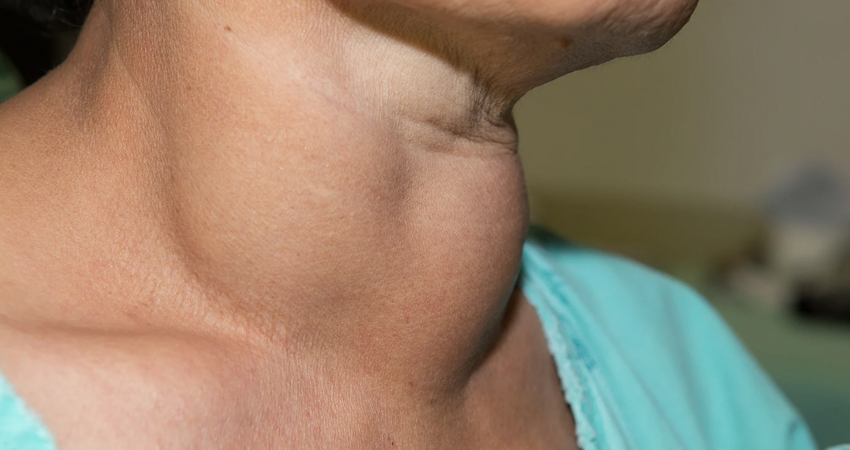
Thyroid Nodules & Goitre
Thyroid nodules are solid or fluid-filled lumps that form within the thyroid gland. Most are benign (non-cancerous) and cause no symptoms. A goitre refers to an abnormal enlargement of the thyroid gland, which can occur with or without nodules. Both conditions require proper evaluation to rule out thyroid cancer or functional abnormalities.
Types of Goitre
- Simple (Diffuse) Goitre – Uniform enlargement of the thyroid
- Multinodular Goitre – Multiple nodules within an enlarged gland
- Toxic Goitre – Enlarged gland producing excess thyroid hormone
Symptoms
- Visible swelling at the base of the neck
- Difficulty swallowing or breathing (in large goitres)
- Hoarseness of voice
- Feeling of tightness in the throat
- Most small nodules cause no symptoms and are found incidentally
Causes
- Iodine deficiency
- Hashimoto's thyroiditis or Graves' disease
- Thyroid cancer (in a small percentage of nodules)
- Benign thyroid cysts or adenomas
- Hormonal changes during pregnancy
Diagnosis
- Thyroid ultrasound (primary investigation for nodules)
- TSH, Free T4, Free T3 blood tests
- Fine Needle Aspiration Cytology (FNAC) for suspicious nodules
- Thyroid scan (radioiodine uptake study)
Treatment
Observation
Small, benign nodules with no symptoms may simply be monitored with regular ultrasound follow-up.
Medication
Thyroid hormone therapy may be used in certain cases to shrink goitres.
Radioactive Iodine
For toxic nodules or goitres causing hyperthyroidism.
Surgery
Recommended for large goitres causing compressive symptoms, suspicious nodules, or confirmed thyroid cancer.
Why Choose Dr. Harsh Parekh?
Dr. Harsh Parekh provides thorough evaluation of thyroid nodules and goitre using latest imaging and laboratory techniques. His expert guidance helps patients understand their diagnosis and receive the most appropriate, evidence-based treatment — from close monitoring to surgical referral when necessary.